

GPT-6 Astra: When AI Starts Working Like You Do
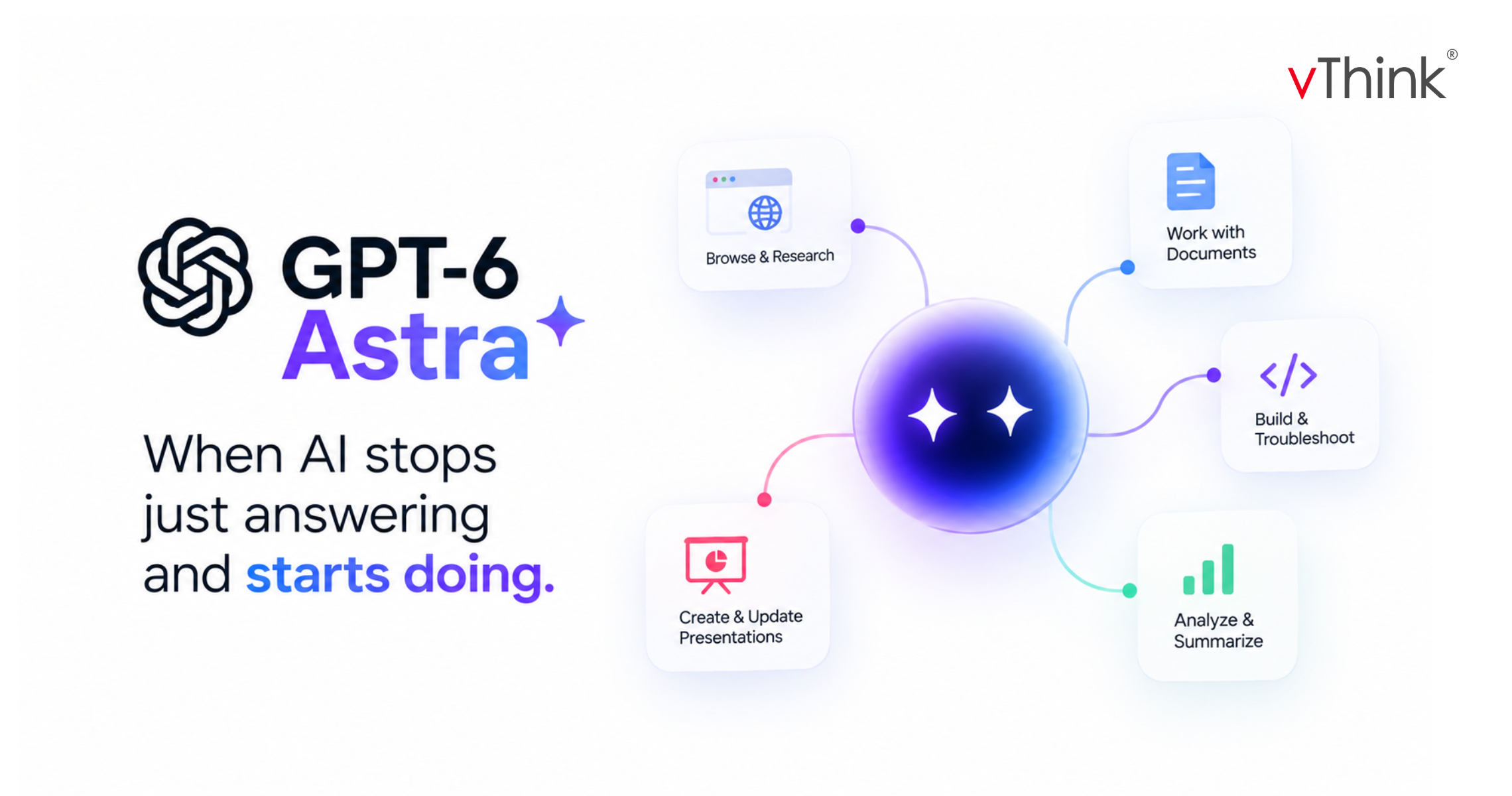
GPT-6 Astra takes AI beyond the traditional chatbot experience, with capabilities focused on computer use, browsing, software engineering, documents, presentations, spreadsheets, and multi-step professional workflows.
Imagine it’s 4:30 on a Friday afternoon.
A landing page needs a final review. A presentation has to be updated using the latest numbers. A few things on the website need to be tested. The spreadsheet has inconsistent formatting. Someone has also asked for a quick summary of the week's work.
None of these tasks is particularly difficult.
The problem is that they are scattered across different tools.
You open the browser, switch to the design file, check the website, open the spreadsheet, update the presentation, go back to the browser, test something, and then start writing the summary.
This is how most knowledge work still happens: humans move between applications, while AI helps inside individual tasks.
GPT-6 Astra introduces a different possibility.
What if the AI could move through that workflow with you?
The Difference Between Getting an Answer and Getting Work Done
Most of us became familiar with AI through a simple interaction: ask a question, get an answer.
That model works extremely well when the task is contained inside the conversation. You can ask an AI to rewrite content, explain a concept, generate code, or summarize a document.
But real work rarely stays inside one conversation.
A designer doesn't just create copy. They work with designs, websites, presentations, assets and feedback. A marketer doesn't just write a post. They research, prepare content, update documents, review analytics and coordinate across tools. A developer doesn't just write code. They inspect an application, test it, find problems and iterate.
The difficult part isn't always thinking of the answer.
It's moving from one step to the next.
That is where GPT-6 Astra becomes particularly interesting.
OpenAI describes Astra as a model built for complex, multi-step professional work, combining advanced reasoning with computer use and the ability to create and work with documents, spreadsheets and presentations.
The shift is subtle but important.
Instead of asking:
“How do I do this?”
You can increasingly ask:
“Do this.”
Think About a Design Review
Imagine you're preparing a new product landing page.
You already have the design direction. The page has a defined visual language, content structure and brand style.
Instead of asking AI to give you a checklist for reviewing the page, you could give it the actual task: inspect the page, identify inconsistencies, check the experience across the relevant screens, and summarize what needs attention.
That is closer to how another member of your team would work.
They wouldn't simply tell you:
"You should check the navigation, spacing and responsive behaviour."
They would actually open the page and check it.
That's the important idea behind computer-using AI.
Astra is designed to interact with computers and carry out multi-step tasks across applications rather than being limited to generating text in a chat window. OpenAI specifically highlights computer use, browsing and professional workflows as core capabilities of the model.
For people who spend their day moving between tools, that difference matters.
Your Software Doesn't Need Another Chatbot
There is another interesting change happening here.
For years, AI products have been built around the idea of putting a chatbot next to existing software.
A chatbot next to your documents.
A chatbot next to your code.
A chatbot next to your browser.
A chatbot next to your spreadsheet.
But the real opportunity may be different.
Instead of adding another box where you can ask questions, AI can become a layer that operates across the software you already use.
OpenAI says Astra can work with existing computer interfaces, including workflows where an API integration isn't available.
That matters because businesses don't run on one perfectly integrated platform.
They run on a collection of tools.
Some have APIs. Some don't. Some are internal systems. Some are legacy applications. Some are simply websites people use every day.
If an AI can work through those interfaces, the automation problem starts looking very different.
From AI Assistant to AI Coworker
This is probably the most interesting part of Astra.
An assistant waits for you to ask something.
A coworker can be given an outcome.
There's a difference between saying:
“Write the content for this presentation.”
and saying:
“Update this presentation using the latest information, keep the existing visual style, and prepare it for tomorrow's review.”
The second instruction contains a goal, not a single action.
The AI has to understand the requirement, inspect the existing material, decide what needs to change, make the changes and produce something usable.
OpenAI specifically says Astra is trained to follow existing templates and create documents, presentations and spreadsheets that fit a company's established style and requirements.
For creative and business teams, that is a meaningful distinction.
The value isn't simply better generated content.
It's less work between the idea and the finished artifact.
This Changes the Role of AI in Product Teams
Think about the number of small tasks surrounding a product launch.
Someone needs to check the website.
Someone needs to review the copy.
Someone needs to validate the form.
Someone needs to test responsive behaviour.
Someone needs to update the presentation.
Someone needs to organize feedback.
Someone needs to prepare the final report.
None of these tasks individually justifies a major automation project.
Together, they consume hours.
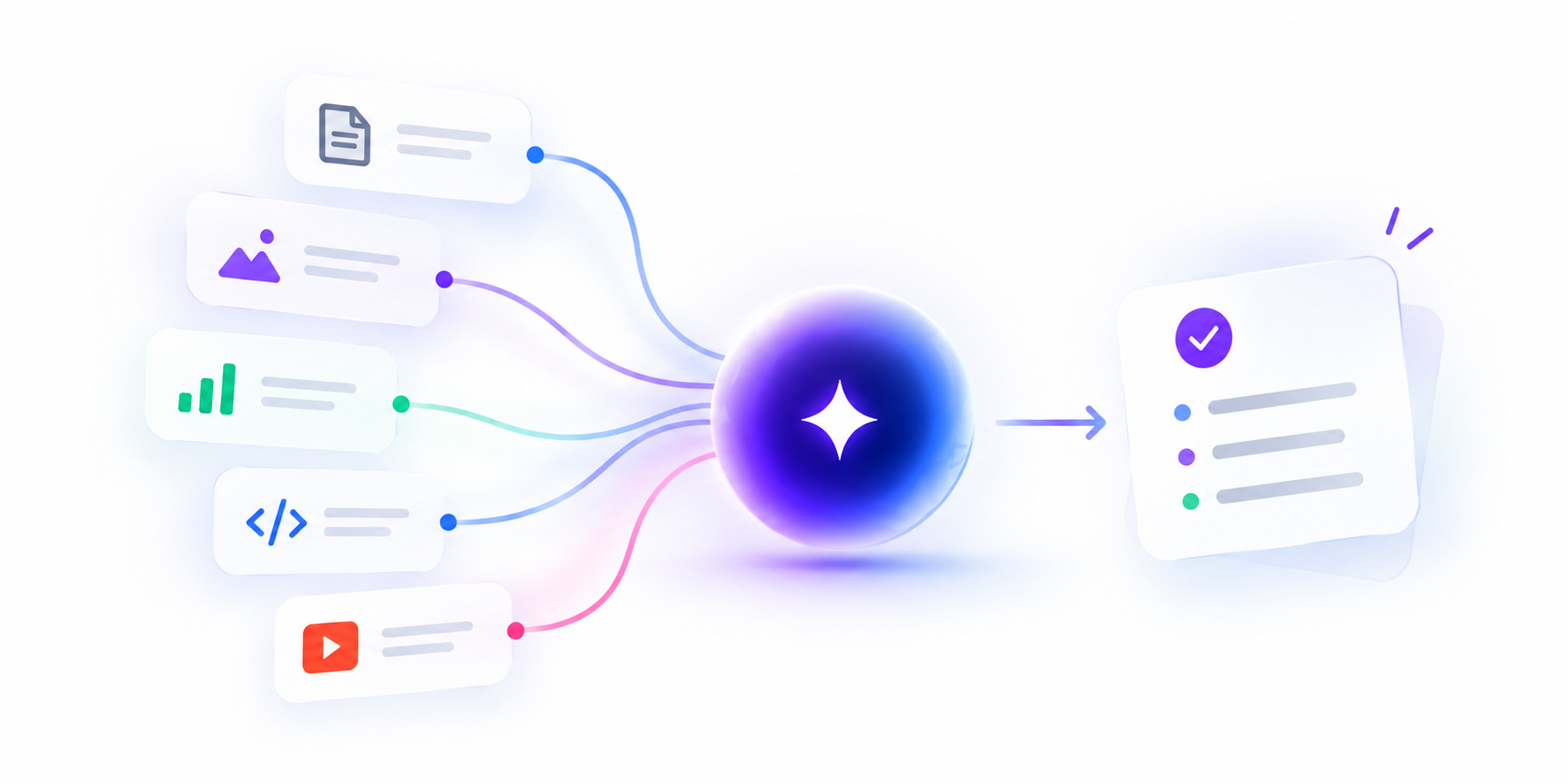
A capable computer-using model could potentially take on parts of that workflow, especially tasks involving browsing, document manipulation, research, coding and repetitive computer interaction.
And that's where AI becomes less like a writing tool and more like an execution layer.
But There's a Bigger Question
The more AI can do, the more important it becomes to decide what it should be allowed to do.
A model that can write text is relatively easy to contain.
A model that can browse, modify files, operate software and execute multi-step workflows has much more influence over the environment around it.
OpenAI's safety work around Astra reflects this shift. OpenAI says Astra is its first model to reach the Critical level of cybersecurity capability under its Preparedness Framework and describes additional safeguards around potentially harmful actions.
That changes the conversation from simply asking whether AI is intelligent enough.
We also have to ask whether the workflow is designed correctly: what permissions does the AI have, what actions require approval, and where should a human remain in control?
The more capable the AI becomes, the more important those boundaries become.
The Real Change Isn't GPT-6. It's the Workflow
It's easy to look at Astra and ask:
“How much smarter is it than the previous model?”
That's useful, but it may not be the most interesting question.
The more important question is:
“What can I now delegate that I couldn't delegate before?”
For a product team, that might mean asking AI to inspect an application rather than explaining how to inspect it.
For a marketing team, it could mean turning research into a finished presentation while preserving an existing template.
For developers, it could mean giving an AI access to a codebase and asking it to investigate, implement, test and iterate.
OpenAI has also highlighted real-world use by companies such as Perplexity, where Astra is being used to modify software, monitor production systems and perform end-to-end testing.
That's a much bigger idea than “AI that writes better.”
It's AI that participates in work.
From Prompting AI to Delegating Work
We've spent the last few years learning how to write better prompts.
The next skill may be different.
It may be learning how to define a good outcome, give AI the right context and permissions, establish checkpoints, and know when a human needs to step back in.
That is a fundamental change in the relationship between people and software.
Instead of opening five applications and asking AI what to do in each one, we may increasingly describe the outcome we want and let AI navigate the tools required to get there.
GPT-6 Astra is an example of that transition.
The interesting question isn't whether AI can write another paragraph, create another image, or answer another question.
We've already seen that.
The more interesting question is what happens when you tell AI:
“Here's the goal. Here's the context. Here's what you can access. Now get the work done.”
That is where AI starts moving from assistant to operator.
And that may be the real story behind GPT-6 Astra.