


Model Context Protocol Servers: 5 Best Options to Scale Your AI Cloud Stack in 2026
Cloud infrastructure has become the backbone of modern businesses, offering unparalleled flexibility, scalability, and efficiency. It's a comprehensive solution that encompasses various components, including servers, storage, and networking resources, which are managed and delivered as a service over the internet. This infrastructure allows organisations to leverage computing power and storage without the need for physical hardware, significantly reducing capital expenditure and maintenance costs.
Understanding Cloud Infrastructure
Cloud infrastructure has become the backbone of modern businesses, offering unparalleled flexibility, scalability, and efficiency. It's a comprehensive solution that encompasses various components, including servers, storage, and networking resources, which are managed and delivered as a service over the internet. This infrastructure allows organisations to leverage computing power and storage without the need for physical hardware, significantly reducing capital expenditure and maintenance costs.
The core of cloud infrastructure lies in virtualisation technology, which enables the abstraction of physical hardware into virtual machines (VMs). This abstraction allows for better resource utilisation, as multiple VMs can run on a single physical server, each operating independently. This setup is not only cost-effective but also enhances the agility of IT operations, enabling businesses to quickly adapt to changing demands.
Moreover, cloud infrastructure supports various deployment models, such as public, private, and hybrid clouds, catering to different business needs. Public clouds, managed by third-party providers, offer scalability and cost savings, while private clouds provide enhanced security and control, ideal for sensitive data and compliance requirements. Hybrid clouds combine the benefits of both, allowing seamless data and application mobility between on-premises and cloud environments.
Key Features of MCP Servers
Managed Cloud Platform (MCP) servers are designed to optimise cloud infrastructure by offering a range of advanced features. One of the most critical features is automated resource management. MCP servers dynamically allocate resources such as CPU, memory, and storage based on real-time demands, ensuring optimal performance and cost efficiency. This automation minimises manual intervention, allowing IT teams to focus on strategic initiatives.
Another key feature is robust security. MCP servers are equipped with advanced security measures, including encryption, firewalls, and intrusion detection systems, to protect sensitive data and applications from cyber threats. These servers also offer compliance with industry standards and regulations, providing peace of mind for businesses operating in highly regulated sectors.
Scalability is also a significant advantage of MCP servers. They can easily scale up or down to accommodate varying workloads, ensuring that businesses only pay for the resources they use. This flexibility is particularly beneficial for businesses with fluctuating demands, such as e-commerce platforms during peak shopping seasons or startups experiencing rapid growth.
Criteria for Choosing the Best MCP Servers
When selecting MCP servers, several criteria must be considered to ensure they meet your business needs. Performance is a top priority, as the server must handle your workloads efficiently without compromising speed or reliability. Look for servers with high processing power, ample memory, and fast storage options to support your applications and services.
Reliability and uptime are also crucial factors. Downtime can have severe consequences, including lost revenue and damaged reputation. Choose MCP servers with a proven track record of high availability and redundancy features, such as failover mechanisms and data replication, to ensure continuous operation even in the event of hardware failures.
Cost is another essential consideration. While MCP servers can offer significant cost savings compared to traditional infrastructure, it's important to evaluate the total cost of ownership (TCO), including subscription fees, usage charges, and potential hidden costs. Compare different providers and their pricing models to find a solution that offers the best value for your budget.
Top 5 MCP Servers Reviewed
1. Amazon Web Services (AWS) EC2
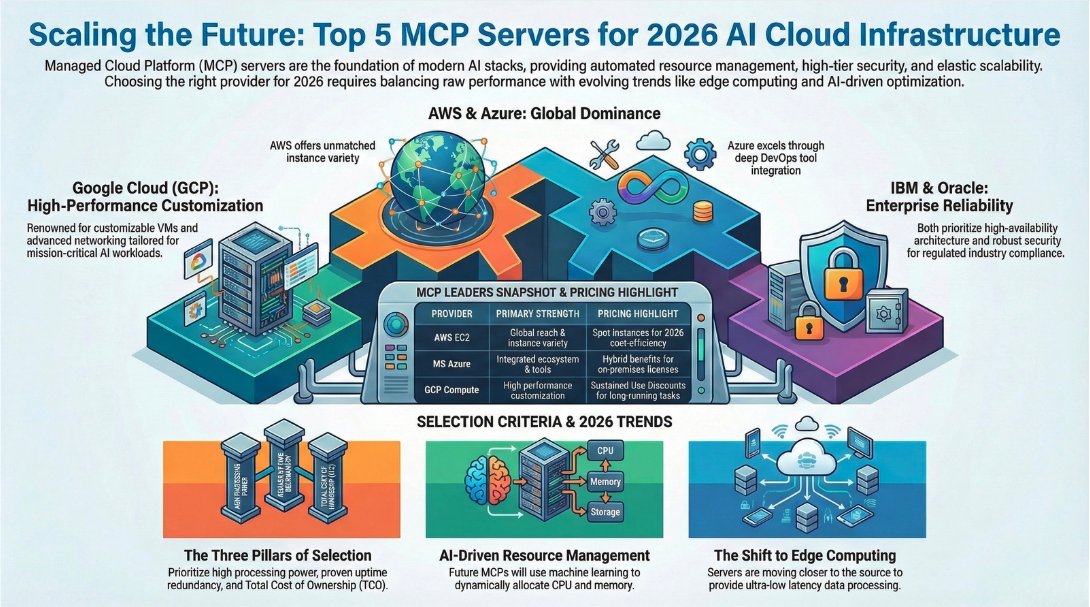
Amazon Web Services (AWS) EC2 is one of the most popular and widely used MCP servers, known for its extensive range of features and global reach. AWS EC2 offers a variety of instance types, tailored to different workloads, from general-purpose to compute-optimised and memory-optimised instances. This flexibility allows businesses to choose the right instance type for their specific needs, ensuring optimal performance and cost efficiency.
AWS EC2 also boasts a robust security framework, with features like Virtual Private Cloud (VPC), Identity and Access Management (IAM), and encryption at rest and in transit. These security measures protect data and applications, making AWS EC2 a reliable choice for businesses with stringent security requirements. Additionally, AWS offers various pricing options, including On-Demand, Reserved, and Spot Instances, allowing businesses to optimise costs based on their usage patterns.
2. Microsoft Azure Virtual Machines
Microsoft Azure Virtual Machines is another leading MCP server, offering a comprehensive suite of features for building, deploying, and managing applications. Azure's VMs come in various sizes and configurations, supporting a wide range of operating systems, including Windows and Linux. This versatility makes Azure suitable for diverse workloads, from simple web applications to complex enterprise solutions.
Azure's integrated tools and services, such as Azure DevOps and Azure Monitor, streamline the development and management of applications, enhancing productivity and operational efficiency. Additionally, Azure's global network of data centres ensures low-latency access and high availability, critical for businesses with a global presence.
Security is a strong suit for Azure, with features like Azure Security Centre, which provides unified security management and advanced threat protection across hybrid cloud workloads. Azure also complies with numerous industry standards and regulations, making it a trustworthy option for businesses in regulated industries.
3. Google Cloud Platform (GCP) Compute Engine
Google Cloud Platform (GCP) Compute Engine is renowned for its high-performance infrastructure and innovative features. GCP's VMs are customizable, allowing businesses to tailor their instances to specific requirements, such as CPU, memory, and storage. This customisation ensures that businesses can optimise their resources and costs effectively.
GCP leverages Google's global network, providing low-latency access and high availability for applications and services. The platform's advanced networking capabilities, such as load balancing and inter-region VPC, enhance performance and reliability, making it an ideal choice for mission-critical workloads.
Security is a top priority for GCP, with features like Identity and Access Management (IAM), encryption by default, and comprehensive auditing and logging. GCP also adheres to strict compliance standards, ensuring that businesses can meet regulatory requirements while maintaining robust security.
4. IBM Cloud Virtual Servers
IBM Cloud Virtual Servers are designed to deliver enterprise-grade performance and reliability. IBM's VMs support a wide range of operating systems and configurations, making them suitable for various workloads, from development and testing to production environments. IBM Cloud's global data centres and high-speed network ensure low-latency access and high availability for applications.
IBM Cloud offers advanced security features, such as encryption, identity and access management, and network security, to protect data and applications. IBM's compliance with industry standards and regulations further enhances its appeal for businesses with stringent security and compliance requirements.
IBM Cloud's integrated tools and services, such as IBM Cloud DevOps and IBM Cloud Monitoring, streamline the development, deployment, and management of applications, enhancing productivity and operational efficiency. Additionally, IBM's flexible pricing models, including hourly and monthly billing, allow businesses to optimise costs based on their usage patterns.
5. Oracle Cloud Infrastructure (OCI) Compute
Oracle Cloud Infrastructure (OCI) Compute is known for its high-performance VMs and robust security features. OCI's instances are available in various shapes and configurations, allowing businesses to choose the right instance type for their specific needs. OCI's infrastructure is designed for high availability and reliability, with features like fault domains and data replication to ensure continuous operation.
OCI's security framework includes features like identity and access management, encryption, and network security, protecting data and applications from cyber threats. OCI also complies with numerous industry standards and regulations, making it a reliable choice for businesses with stringent security and compliance requirements.
Oracle Cloud's integrated tools and services, such as Oracle Cloud DevOps and Oracle Cloud Monitoring, streamline the development, deployment, and management of applications, enhancing productivity and operational efficiency. Additionally, Oracle's flexible pricing models, including Pay-As-You-Go and Reserved Instances, allow businesses to optimise costs based on their usage patterns.
Performance Comparison of the Leading MCP Servers
When it comes to performance, each of the top MCP servers has its strengths, catering to different business needs. AWS EC2 is renowned for its extensive range of instance types and global reach, offering businesses the flexibility to choose the right instance for their workloads. AWS's robust security framework and various pricing options further enhance its appeal.
Microsoft Azure Virtual Machines stand out for their integrated tools and services, such as Azure DevOps and Azure Monitor, which streamline the development and management of applications. Azure's global network of data centres ensures low-latency access and high availability, critical for businesses with a global presence.
Google Cloud Platform (GCP) Compute Engine is known for its high-performance infrastructure and innovative features. GCP's customizable VMs and advanced networking capabilities, such as load balancing and inter-region VPC, enhance performance and reliability, making it an ideal choice for mission-critical workloads.
IBM Cloud Virtual Servers offer enterprise-grade performance and reliability, with advanced security features and integrated tools and services. IBM's flexible pricing models allow businesses to optimise costs based on their usage patterns, making it a cost-effective solution for various workloads.
Oracle Cloud Infrastructure (OCI) Compute is known for its high-performance VMs and robust security features. OCI's infrastructure is designed for high availability and reliability, with features like fault domains and data replication to ensure continuous operation. Oracle's integrated tools and services streamline the development, deployment, and management of applications, enhancing productivity and operational efficiency.
Cost Analysis and Budget Considerations
Cost is a critical factor when choosing MCP servers, as businesses must balance performance and reliability with budget constraints. AWS EC2 offers various pricing options, including On-Demand, Reserved, and Spot Instances, allowing businesses to optimise costs based on their usage patterns. While On-Demand instances provide flexibility, Reserved Instances offer significant cost savings for steady workloads, and Spot Instances provide the lowest prices for flexible, non-critical workloads.
Microsoft Azure Virtual Machines also offer flexible pricing models, including Pay-As-You-Go, Reserved Instances, and Spot VMs. Azure's pricing calculator helps businesses estimate costs based on their specific requirements, ensuring that they can make informed decisions. Additionally, Azure's hybrid benefits allow businesses with existing on-premises licenses to save on cloud costs.
Google Cloud Platform (GCP) Compute Engine provides a range of pricing options, including On-Demand, Preemptible VMs, and Sustained Use Discounts. GCP's Preemptible VMs offer significant cost savings for flexible workloads that can tolerate interruptions, while Sustained Use Discounts automatically apply discounts for consistent usage, reducing costs for long-running workloads.
IBM Cloud Virtual Servers offer hourly and monthly billing options, allowing businesses to choose the pricing model that best suits their usage patterns. IBM's pricing calculator helps businesses estimate costs based on their specific requirements, ensuring that they can make informed decisions. Additionally, IBM's flexible pricing models allow businesses to optimise costs based on their usage patterns.
Oracle Cloud Infrastructure (OCI) Compute offers Pay-As-You-Go and Reserved Instances pricing models, allowing businesses to optimise costs based on their usage patterns. OCI's pricing calculator helps businesses estimate costs based on their specific requirements, ensuring that they can make informed decisions. Additionally, Oracle's flexible pricing models allow businesses to optimise costs based on their usage patterns.
User Experiences and Testimonials
User experiences and testimonials provide valuable insights into the real-world performance and reliability of MCP servers. AWS EC2 users often praise its extensive range of instance types, global reach, and robust security framework. Businesses appreciate the flexibility to choose the right instance for their workloads and the various pricing options that help optimise costs. However, some users note that AWS's pricing can be complex, requiring careful management to avoid unexpected costs.
Microsoft Azure Virtual Machines users frequently highlight the integrated tools and services, such as Azure DevOps and Azure Monitor, which enhance productivity and operational efficiency. Azure's global network of data centres and robust security features are also highly regarded. Some users, however, mention that Azure's pricing can be higher than competitors' for certain workloads, necessitating a thorough cost analysis.
Google Cloud Platform (GCP) Compute Engine users often commend its high-performance infrastructure and innovative features, such as customizable VMs and advanced networking capabilities. GCP's security measures and compliance with industry standards are also well-received. Some users, however, note that GCP's pricing can be challenging to navigate, requiring careful planning to optimise costs.
IBM Cloud Virtual Servers users frequently praise the enterprise-grade performance and reliability, as well as the advanced security features. IBM's integrated tools and services, such as IBM Cloud DevOps and IBM Cloud Monitoring, are also highly regarded. Some users, however, mention that IBM's pricing can be higher than competitors' for certain workloads, necessitating a thorough cost analysis.
Oracle Cloud Infrastructure (OCI) Compute users often highlight the high-performance VMs and robust security features. OCI's infrastructure is designed for high availability and reliability, which is highly valued by businesses with mission-critical workloads. Some users, however, note that Oracle's pricing can be challenging to navigate, requiring careful planning to optimise costs.
Future Trends in MCP Servers and Cloud Infrastructure
The future of MCP servers and cloud infrastructure is poised to be shaped by several emerging trends. One significant trend is the increasing adoption of artificial intelligence (AI) and machine learning (ML) technologies. MCP servers are expected to integrate more AI and ML capabilities to enhance automation, resource optimisation, and predictive analytics, enabling businesses to make data-driven decisions and improve operational efficiency.
Another trend is the growing focus on edge computing. As the demand for low-latency access to data and applications increases, MCP servers will need to support edge computing capabilities, allowing data processing to occur closer to the source. This shift will enable faster response times and reduce the load on central cloud servers, enhancing overall performance and user experience.
Security and compliance will continue to be top priorities for MCP servers. As cyber threats evolve and regulatory requirements become more stringent, MCP servers will need to incorporate advanced security measures, such as zero-trust architecture and enhanced encryption, to protect data and applications. Additionally, MCP servers will need to support compliance with a broader range of industry standards and regulations, enabling businesses to operate securely in diverse sectors.
Conclusion and Recommendations
In conclusion, MCP servers play a crucial role in optimising cloud infrastructure, offering advanced features, robust security, and scalability to meet diverse business needs. AWS EC2, Microsoft Azure Virtual Machines, Google Cloud Platform (GCP) Compute Engine, IBM Cloud Virtual Servers, and Oracle Cloud Infrastructure (OCI) Compute are among the top MCP servers that can elevate your cloud infrastructure, ensuring performance, reliability, and unmatched dominance in your digital landscape.
When choosing the best MCP server for your business, consider key criteria such as performance, reliability, cost, and security. Evaluate each provider's features, pricing models, and user experiences to make an informed decision that aligns with your business goals and budget. Additionally, stay informed about emerging trends in MCP servers and cloud infrastructure to leverage new technologies and maintain a competitive edge.
Ultimately, the right MCP server can significantly enhance your cloud infrastructure, enabling your business to achieve greater efficiency, agility, and scalability. By carefully selecting and optimising your MCP server, you can ensure that your cloud infrastructure supports your business's growth and success in the ever-evolving digital landscape.